Specimen of the thick-cled live hermit crab

Specimen of the thick-cled live hermit crab

The thick-chelated live hermit crab (DardanusCrassimanus) is the dominant species in the Indian Ocean-Pacific tropical beach and reef junction area (0-10 m water depth), distributed in the western Pacific: Japan (Hokkaido to Okinawa), Korean Peninsula, East China Sea (Zhejiang, Fujian beach), Philippines, Indonesia. Indian Ocean: Gulf of Thailand, Bay of Bengal coast. Diet omnivorous partial rot food, body length (including shell) 5-8cm, body width 3-5cm.
Monarch butterfly group 3D animation model

Monarch butterfly group 3D animation model

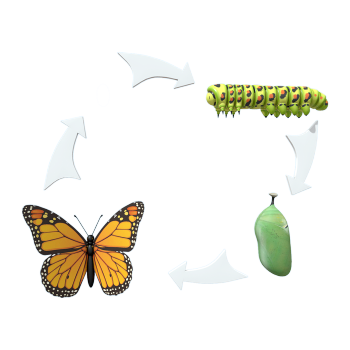
Monarch butterfly is a large butterfly, belonging to the family Papilionidae. The wings are orange with blackish veins and margins, and a row of small white spots along the edges. This unique color combination makes it very eye-catching when flying. The life cycle includes four stages: egg, larva, pupa and adult. The larvae feed on milkweed, a plant that contains toxins that gives monarch butterflies a certain defense against natural enemies after they become adults. The adults mainly feed on nectar, have strong flight ability and long migration distance. The most famous feature is its large-scale migratory behavior. This migratory behavior is one of the most spectacular phenomena in the insect world.
Muscle anatomy (3D microscopic structure diagram)

Muscle anatomy (3D microscopic structure diagram)

Neutrophils (Microscopic 3D Schematic)

Neutrophils (Microscopic 3D Schematic)

White tailed sea eagle specimen

White tailed sea eagle specimen

The White tailed Eagle, scientific name Haliaeetus albicilla, is a large raptor widely distributed in temperate Eurasia. They usually live near large open water bodies, such as coastal saltwater areas, inland freshwater lakes, wetlands, and rivers. The white tailed sea eagle is known for its strong hunting ability and opportunistic scavenging behavior, mainly preying on fish and waterbirds.
Virus with DNA helix (microscopic 3D schematic)

Virus with DNA helix (microscopic 3D schematic)

Mycobacterium tuberculosis (microscopic 3D sectional view)

Mycobacterium tuberculosis (microscopic 3D sectional view)

The structure of neuronal cells

The structure of neuronal cells

Bacteria with Dna helix (microscopic 3D schematic)

Bacteria with Dna helix (microscopic 3D schematic)

Small lymphocytes, large lymphocytes, and monocytes (microscopic 3D perspective view)
Small lymphocytes, large lymphocytes, and monocytes (microscopic 3D perspective view)

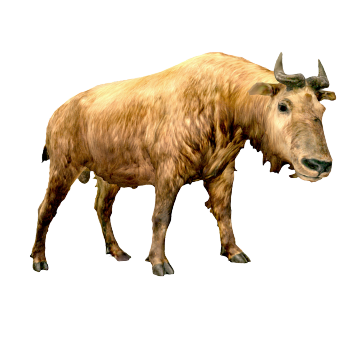
Takin specimen

Takin specimen

Takins are also known as takins. This large ungulates are mainly distributed in the eastern the Himalayas, including Bhutan, China, India and Myanmar. It is a large ungulates belonging to the Bovidae family and Caprinae subfamily. They usually live in mountainous areas with an altitude of 2000 to 4500 meters and enjoy activities on the edges of forests and grasslands.
Southern giant terror bird skeleton

Southern giant terror bird skeleton

The southern giant terror bird (Dinornis robustus) is a species of terror bird, also known as the South Island giant terror bird. Like other terror birds, they cannot fly. The origin of these birds may be due to the early ancestors of terror birds being able to fly and reach the South Island of New Zealand. The southern giant terror bird is the largest among terror birds. Adult female birds can reach a shoulder height of up to 2 meters and a total height of 3.6 meters, making them the tallest known bird species. It lives in the lowlands of the South Island of New Zealand. It may have become extinct as early as the 13th century.
14 million year old scorpionfish fossils

14 million year old scorpionfish fossils

Scorpion fish is one of the most venomous and inconspicuous fish species in the ocean. These ambushing predators are experts in integrating into the environment, sitting patiently at the top of coral reefs waiting for unsuspecting prey to swim over. The color of scorpionfish ranges from dull brown and yellow to bright red and orange, perfectly matching the surrounding coral and even exhibiting feather like fins or flaps to better camouflage with neighboring corals.
Przewalski's Mustang specimen

Przewalski's Mustang specimen

The Przewalski's horse is a mammal belonging to the mammalian family Macroma in the order Neodactyla; Its body shape is similar to that of a domestic horse, with a large head and thick neck, short and round ears, no long frontal hair, short and upright mane, a black ridge line in the center of the back, short tail base hair, and black front of the lower limbs; Its summer fur is light brown on the back, light on the sides, and yellow white on the abdomen; its winter fur is long and thick, with a lighter color, appearing light yellow. The Przewalski's wild horse is also known as the Mongolian wild horse or the Junggar wild horse. Due to multiple reasons such as ruthless hunting by humans and the deterioration of the ecological environment in their habitats, Przewalski's horses became extinct in the wild in the mid-20th century.
Titan python fossil

Titan python fossil

The Titan Python belongs to the Python family. Titan pythons lack external and middle ears, resulting in delayed hearing; The olfactory organ grows on the tongue; Without eyelids, one cannot close their eyes; There are lungs. The fossils of the Titan Python can be traced back to the Guajira Peninsula in northeastern Colombia, South America, approximately 60 to 58 million years ago. The Titan Python dominated the Earth for at least 10 million years. Titan pythons are cold-blooded animals with a habit of sunbathing and hunting after their bodies become warm. According to researchers' analysis, the food of the Titan Python includes blunt nosed crocodiles weighing half a ton, lungfish up to three meters long, and some large turtles.
Javanese Rhinoceros Specimen

Javanese Rhinoceros Specimen

The Javan rhinoceros is a mammal of the Rhinoceros genus in the Rhinoceros family, also known as the small unicorn rhinoceros. Strong and robust physique. The skin is mostly brown black, gray black, and has wart like protrusions. Except for obvious hair on the tips and tails of the ears, the rest of the body is almost hairless. The average weight is around 1500 kilograms. The body length is 2-3.5 meters, and the shoulder height is about 1.5 meters. The ears are oval in shape, with a thick and long head and a short and thick neck. The upper part of the nose has a low solid horn, which is usually not prominent in adult females. Its horn is smaller than that of the Indian rhinoceros, hence it is also known as the small unicorn rhinoceros. The lifespan is around 40 years. The Javan rhinoceros is the smallest of the five existing rhinoceros species, with less than 100 individuals, and is on the brink of extinction in the wild.
Lianglong skeleton

Lianglong skeleton

Lianglong is a dinosaur belonging to the family Lianglong in the order Saurischia. The neck is long, the head is small, and the position of the nostrils is higher than the eyes; The front of the mouth has flat teeth, while the sides and back have no teeth; Strong limbs, short forelimbs, long hind limbs; The buttocks are higher than the front shoulders; Each palm has 5 fingers (toes); The tail is longer than the neck and gradually narrows towards the end, forming a whip like shape, with over 10 human bones in the middle. The name Shuanglianglong comes from two protrusions that protrude from the top of the human character bone, resembling double beams, and is commonly referred to as Lianglong.
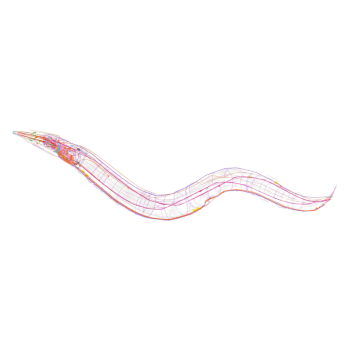
The nervous system of Caenorhabditis elegans

The nervous system of Caenorhabditis elegans

Caenorhabditis elegans (C. elegans) is a non-toxic and harmless nematode that can survive independently. It is small in size, with an adult length of only 1.5mm, and is hermaphrodites. Male individuals make up only 0.2% of the population and can undergo self fertilization or bisexual reproduction; The average life history at 20 ℃ is 3.5 days, and the average reproductive capacity is 300-350; But if mated with male insects, it can produce up to 1400 or more offspring.
Blue antelope specimen

Blue antelope specimen

The Blue Antelope is a member of the Oxidae family, with a shoulder height of approximately 102-120 centimeters and a weight of around 180 kilograms. Its gray fur appears blue gray under strong sunlight. Distributed in South Africa, it became extinct in 1799 AD.
Black Swan Specimen

Black Swan Specimen

The black swan is a bird species belonging to the family Cynoglossidae in the order of geese. The black swan is covered with flocculent gray feathers on its back; The neck is slender and often curved into an elegant "S" shape; The beak is bright red with a "V" - shaped white discharge at the front end; The iris is reddish red, and the tarsus and fins are black. Its physical characteristics are that except for a small part of the primary feathers that are white, the rest of the body's feathers are bright and black, hence the name.
Curling Armadillo

Curling Armadillo

Armadillo is a mammal of the family Armadillidae in the order Heterodontoides. The bone armor covers the head, body, tail, and outer legs. The bone armor in the head, front half, and back half is separated, and the bone armor in the body forms a band shape, allowing for flexible movement; Having sparse hair in areas of the body without bone armor; There are strong claws on the front foot. The armadillo is named after the nine layered ribbon on its body
Paramecium (Microscopic 3D Structure Diagram)

Paramecium (Microscopic 3D Structure Diagram)

Paramecium is a ciliate belonging to the family Paramecidae in the order Hymenostomes. The body of paramecium is small, cylindrical, and composed of only one cell. It is a unicellular animal, hermaphrodite. The most common is Paramecium, with a body length of only 80-300 micrometers. The surface of the body is covered with a membrane, densely covered with many cilia. The paramecium is named after its body shape, which looks like an inverted sole from a flat angle.
Amoeba (microscopic 3D schematic)

Amoeba (microscopic 3D schematic)

Amoeba is a unicellular animal belonging to the genus Amoeba in the family Proteaceae of the order Proteobacteria. There is only a thin plasma membrane on the surface of the body, and the cytoplasm inside the membrane is relatively transparent, which can be clearly distinguished into two parts: endoplasmic and extracellular; Pseudo feet are shaped like fingers, leaves, or needles; Insects can undergo special deformation movements through pseudopodia, which change with the expansion and contraction of pseudopodia; Pseudo foot not only has the function of movement, but also has the function of feeding. After wrapping food, it undergoes intracellular digestion. Named after the constant changes in body shape caused by the movement of the parasite's cytoplasm.
The life cycle of butterflies

The life cycle of butterflies

1 2 3 Next